 Express Transcript
Interview Into Text Conversion: The Practical Way HR and Journalists Get Reliable Transcripts
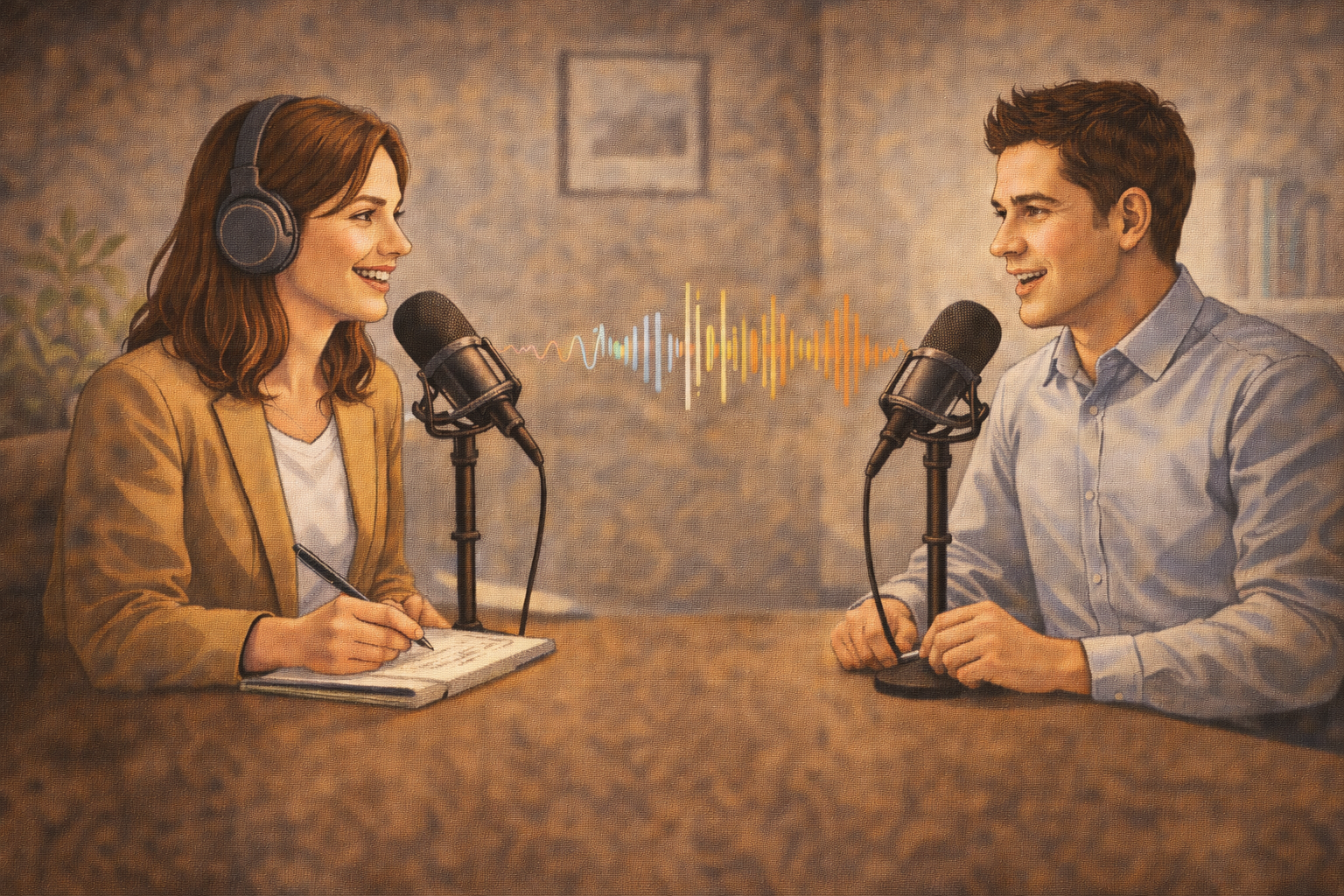
Two people can walk out of the same interview with two different memories. That is normal. It is also exactly why interview into text conversion matters. Once the conversation becomes text, you can review it, verify it, and use it without guessing what somebody "meant" an hour later.
If you work in HR, bad interview notes create weak hiring decisions and messy handoffs. If you are a journalist, weak transcripts create quote mistakes and credibility risk. Different jobs, same pain: spoken information is fragile until it is captured properly.
This guide is written for real workdays, not conference slides. You will get a system you can run today to transcribe an interview, clean it fast, and publish or document with confidence.
Core idea: interview transcription is not only about speed. It is about trust. A transcript should be accurate enough that another person can make a decision from it without replaying the full recording.
What goes wrong in the wild
Not in theory. In actual teams.
Last quarter, an HR panel rejected a candidate partly because one answer looked evasive in notes: “I didn’t lead that project.” When the recording was transcribed and reviewed, the full sentence was: “I didn’t lead that project alone; I owned delivery after scope changed.” Same candidate, same interview, opposite interpretation.
Newsroom version: a reporter wrote a quote as “we’ll cut 12% headcount this year.” The transcript later showed “we’ll cut 12% in external contractor spend this year.” If that went to print unverified, it would have been a serious error with legal consequences.
In one HR loop, a team moved a candidate from “average communicator” to “strong communicator” after transcript review showed he had answered clearly, but two panel notes had clipped his response mid-sentence.
In one newsroom edit, an editor almost cut a paragraph because it looked repetitive in notes, then kept it after transcript review showed it contained the source's only explicit timeline.
That is why interview transcription matters. Not because it is modern. Because memory is messy and stakes are high.
How I transcribe an interview when I actually have a deadline
I do not run a perfect three-pass cathedral every time. I run a blunt, fast sequence and protect the dangerous lines first.
- Get the draft immediately after the call. If you wait a day, edit time jumps because context fades.
- Fix speaker attribution first. Wrong speaker labels are worse than ugly punctuation.
- Mark risk lines while reading. Names, numbers, role titles, legal phrasing, compensation, direct quotes.
- Replay only marked lines. Do not relisten to the whole file unless quality is clearly broken.
- Export in the format the next person needs. Not your favorite format, their usable format.
That is it. Short, repeatable, and realistic. Tools like our online interview transcription tool help because you can upload, transcribe an interview quickly, relabel speakers, and export without jumping between five tabs.
Most teams do not have a transcription engine problem, they have an editing-discipline problem.
Before/after: one line can change the decision
Here is a real pattern from interview into text conversion work. The first draft is not “bad,” but one detail is wrong enough to change meaning.
In HR, that affects leveling decisions. In journalism, that is the difference between precise reporting and accidental exaggeration.
Small correction, big impact.
If you need to convert job interview into text for hiring panels
Now the annoying part: this is where teams often get lazy and lose the value they just created.
Do not stop at a transcript file. Build a package people can read in under five minutes.
| Deliverable | What goes in | Who uses it next |
|---|---|---|
| Transcript file | Cleaned interview text, corrected speaker labels, timestamps on key responses. | Interview panel and hiring manager. |
| Evidence notes | Exact lines supporting strengths, concerns, and role fit decisions. | Recruiter, panel lead, and final approver. |
| Decision summary | One-page rationale with explicit “hire / no hire / next round” reasoning. | Stakeholders who do not read full transcripts. |
One more thing, and this is opinionated on purpose: when you convert job interview into text, keep facts, interpretation, and recommendation in separate blocks. If you mix them, bias sneaks in disguised as confidence.
Journalist mode, no fluff
Anyway, this section is simple on purpose.
Interview transcription for reporting should be strict where it counts. Not fancy. Strict.
- Unclear word? Mark it. Never silently “fix” a quote that sounds close enough.
- Add timestamps to publishable quotes. Future-you will thank you during fact check.
- Separate quote bank from paraphrase notes. That one separation prevents most accidental quote drift.
- Replay every high-impact quote once. I would not ship a sensitive quote without that pass.
- Keep revision history. If wording is challenged later, you need a clean trail.
For publication work, my own rule is simple: if quote confidence is below 9/10, it is not ready.
A real 20-minute edit session (what it actually looks like)
People ask for a system, so here is a plain one. Imagine a 42-minute interview recording landed in your inbox at 15:10.
15:10-15:13: generate transcript, skim first screen, confirm audio is complete. If you see missing chunks right away, stop and fix source quality first.
15:13-15:18: correct speaker names. No style edits yet. Just attribution. In mixed interviews, this is where most downstream confusion starts, so it gets first priority.
15:18-15:24: mark risk lines while reading: salary numbers, date ranges, titles, legal phrases, direct publication quotes. I usually drop a simple marker like [CHECK] on those lines so I can jump back quickly.
15:24-15:28: replay only the marked lines, fix them, and move on. This is the whole trick. If you replay everything, you lose the speed advantage of interview transcription.
15:28-15:30: export and ship the right output. HR gets transcript + evidence notes. Journalist gets transcript + quote bank + verification list.
This is not glamorous. It works.
Three questions to ask before recording starts
These are tiny, but they prevent expensive cleanup later.
- “Can you state your role exactly as you want it referenced?” This avoids title corrections and attribution confusion in both HR and publishing workflows.
- “If we quote this later, is there anything off limits?” Especially useful in journalist interviews where boundaries change how you store and use transcript segments.
- “Can we keep one person speaking during key answers?” Ten seconds of asking this can save twenty minutes of overlap cleanup.
Most teams skip these because they feel awkward. They should not. You are setting conditions for trustworthy records.
Interview transcription mistakes that quietly waste time
Editing everything equally
You burn 30 minutes polishing harmless filler while missing one wrong date that actually matters.
Late cleanup
Two days later, everyone forgot tone and sequence. Same transcript, double the effort.
Speaker labels left unresolved
Once attribution is shaky, trust drops and people go back to the recording anyway.
No owner for final output
Everybody assumes somebody else will finalize it. Nobody does. The transcript never becomes usable.
Clean transcript or verbatim transcript?
Pick this before you start editing. Otherwise teams argue mid-process and redo work.
- Hiring decisions: cleaned transcript, plus verbatim lines for sensitive answers.
- Publishable quotes: verify verbatim for every quote that could trigger dispute.
- Internal operational notes: mostly cleaned transcript is usually enough.
Neither style is “correct” universally. Correct means fit for purpose.
Consent, privacy, storage (short version that teams can follow)
Interview into text conversion is a documentation win, but it also creates durable records. Treat them accordingly.
- Define who can view raw audio vs cleaned transcript.
- Set retention windows in writing, by interview type.
- Tag sensitive interviews at upload, not after the fact.
- Use consistent consent language and keep an audit trail.
- Track revisions to key lines.
It sounds boring until you need to defend a decision or a quote. Then it is everything.
One boring habit that saves hours: naming and handoff discipline
Interview transcription gets messy when files are named like final_v2_new_REALfinal.docx. That is how teams lose the version they actually approved.
Use a plain format and stick to it: YYYY-MM-DD_INTERVIEWEE_TOPIC_STATUS. Example: 2026-02-16_MariaChen_ProductLead_VERIFIED.
Then add one line in the handoff note:
That tiny habit reduces back-and-forth more than most tool tweaks.
Final word
Good interview into text conversion is not about making perfect prose. It is about preserving truth under time pressure. HR teams need decision-grade records. Journalists need quote-grade accuracy. Both can get there with the same disciplined sequence: capture cleanly, transcribe fast, correct by risk, and export for the next real action.
If your current process still depends on memory and scattered notes, you are doing harder work than necessary. A reliable transcript does not remove judgment. It gives judgment better raw material.
Run the 3-Interview Proof Test
Take one candidate interview, one stakeholder interview, and one difficult audio file. Process all three end-to-end in one afternoon. Measure edit time, quote confidence, and handoff quality. If the process holds on those three, it will hold in production.
Try 15 free minutes on your next interview