 Express Transcript
Transcribing Medical Calls: Why It Matters for Clinics and Hospitals
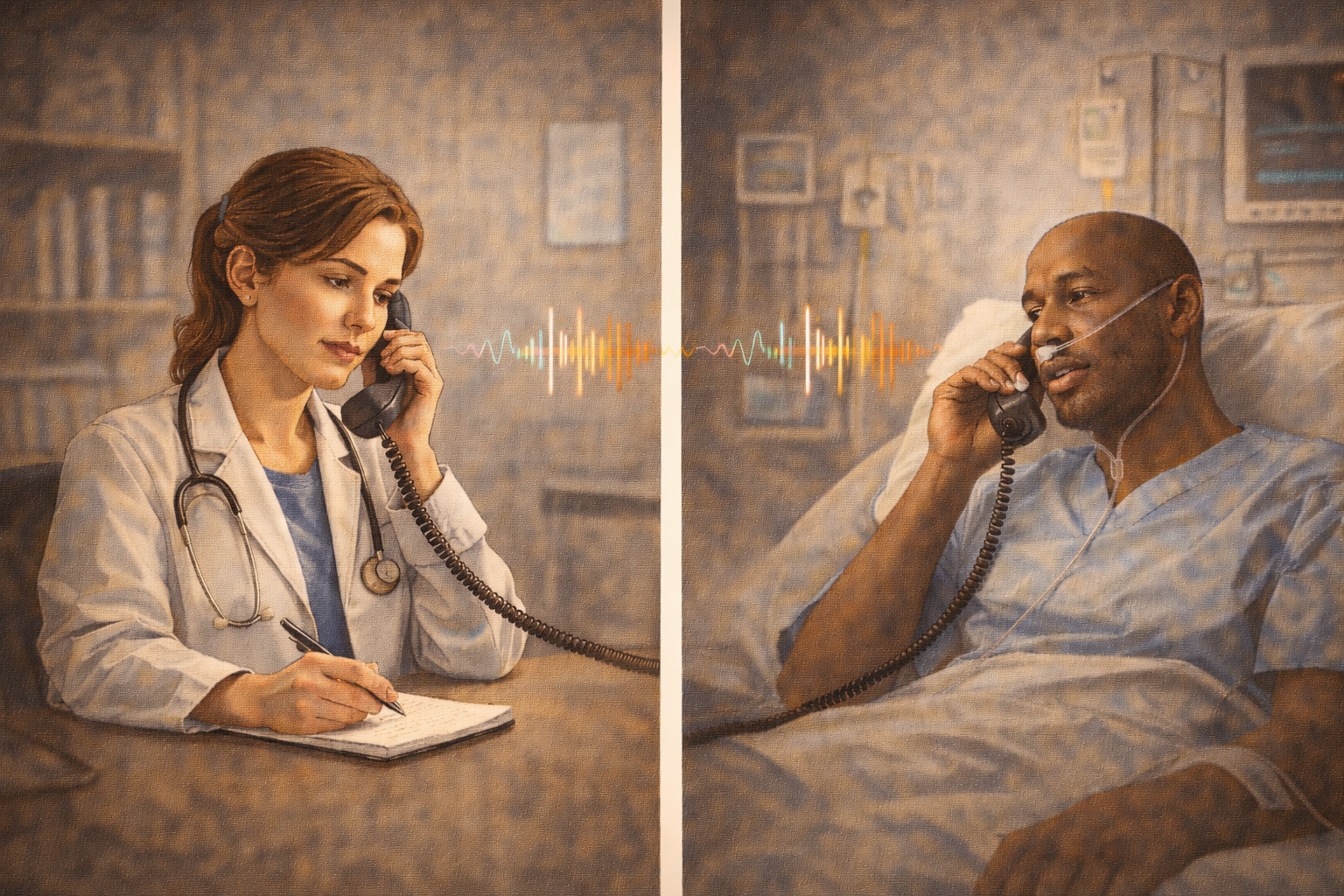
Most people hear "medical transcription" and think clerical cleanup. In real clinics, it is risk control. One incorrect date, one dropped "no," one mixed-up medication strength, and your staff spends the next day fixing downstream confusion.
Last month, a triage callback note looked simple: "chest pain improving." The recording actually said "chest tightness improving, pain still present when climbing stairs." That one sentence changed urgency, follow-up timing, and the nurse handoff.
Another day, a dictated follow-up sounded like "metformin five hundred daily." On replay, the physician had said "metformin five hundred twice daily." If that line gets copied into a summary unchecked, somebody is now chasing preventable correction work under pressure.
That is why medical call transcription is not a "nice to have." It is part of care continuity.
Good transcription for healthcare is not about perfect punctuation. It is about preserving clinical meaning when people are tired, calls are fast, and context changes by the hour.
Where errors in medical transcription hurt first
The first break usually appears in transitions: front desk to nurse, nurse to provider, provider to billing, or provider to specialist referral. The transcript is often the bridge, so weak bridges fail where traffic is highest.
| Recording type | Typical failure | Operational impact |
|---|---|---|
| Medical call transcription (triage/follow-up) | Symptoms and timeline compressed too aggressively. | Wrong urgency level, duplicated outreach, delayed escalation. |
| Medical dictation transcription | Drug/dose/frequency ambiguity not flagged. | Rework in chart notes, clinician interruption, audit friction. |
| Doctor-patient conversations | Conditional phrasing flattened into certainty. | Misleading summaries and inconsistent patient instructions. |
| Care team coordination calls | Owners and deadlines omitted. | Tasks drift, callbacks missed, accountability unclear. |
None of this is exotic. It is routine. That is exactly why it deserves a system instead of ad hoc cleanup.
How to transcribe medical calls accurately without slowing your team
People ask this constantly: how to transcribe medical calls accurately when volume is high and staff is already overloaded. The answer is not "edit everything deeply." The answer is targeted control points.
- Standardize intake before upload. Require caller or patient ID reference, date, care setting, and owner. If metadata is messy at intake, everything after it is slower.
- Prime terminology for the encounter. Add known medication names, provider names, and specialty terms before transcription starts. This raises first-pass usefulness quickly.
- Generate the draft immediately. Delay increases correction time because reviewer context fades.
- Fix speaker attribution early. In healthcare conversations, knowing who said what matters more than comma polish.
- Run a risk-line replay pass. Replay only names, dates, doses, frequencies, negations, and follow-up instructions.
- Publish in role-specific output. Nurse summary, physician review block, and admin handoff should not be one generic paragraph.
- Log error patterns weekly. If the same term fails repeatedly, fix dictionary and intake rules once, not file by file forever.
Do not guess medication names. Ever.
Before/after: tiny line edits that change care context
These are common correction patterns from medical transcription QA. The first draft is understandable, but not safe enough for operational use.
Same total dose, different schedule. In practice, this can affect patient instructions and follow-up calls.
One misplaced "no" can invert the clinical signal. This is why replaying risk lines is non-negotiable.
Medical transcription AI tools: strong accelerator, weak final authority
Medical transcription AI tools are excellent for speed and first-pass structure. They are not a replacement for medical judgment, and they should not be treated as a final signer of truth.
Where AI tools help
Fast draft generation, speaker segmentation, searchable timestamps, and quick export to team formats.
Where AI tools struggle
Accent shifts mid-call, overlapping speech, uncommon drug names, and heavily abbreviated dictation.
Best operating model
AI for speed, targeted human replay for high-risk lines, then role-specific distribution.
Wrong operating model
Auto-generate and forward unchanged to clinical staff under deadline pressure.
If your team uses speech to text in healthcare, treat it like a high-leverage assistant, not an unsupervised decision layer.
How to transcribe doctor patient conversations without flattening nuance
Doctor-patient conversations are messy by nature: interruptions, soft qualifiers, side details, and emotional language. A literal dump can be hard to use. Over-compression can remove intent.
The middle path works better:
- Preserve qualifiers: "possible," "unlikely," "monitor," and "if worsens" carry real meaning.
- Separate observation from plan: what happened vs what to do next.
- Keep timeline anchors: "for three days," "since Friday," "after medication change."
- Tag unresolved points: pending labs, pending referral, pending callback.
I have seen teams save hours just by splitting each transcript into three blocks: symptoms/history, assessment language, and follow-up actions. Same content, much faster handoff.
Medical dictation transcription needs a different edit lens
Dictation audio often sounds cleaner than live calls, so teams assume it is safer. Sometimes it is, sometimes it is not. Dictation carries compressed shorthand, and shorthand fails hard when expanded incorrectly.
For medical dictation transcription, add two extra checks:
- Abbreviation resolution check: verify that abbreviations were expanded correctly for your specialty context.
- Dose-form-frequency check: do not approve lines unless all three are explicit and coherent.
Transcription workflow for hospitals and clinics
You only need one queueing model if you define service lanes clearly. This is where most teams either gain stability or lose it.
| Lane | Examples | Target turnaround | Mandatory QA focus |
|---|---|---|---|
| Critical | Triage callbacks, urgent follow-up calls, escalation recordings. | Same day | Symptoms, negations, timeline, escalation instruction. |
| Clinical routine | Doctor-patient summaries, standard follow-ups, care coordination. | 24 hours | Speaker clarity, care plan wording, owner + due date. |
| Administrative | Operational meetings, training calls, non-urgent internal notes. | 24-48 hours | Searchability, section labeling, archival consistency. |
One clinic ops manager told me the biggest improvement came from a tiny change: every transcript had to declare lane before processing. That single field ended daily queue arguments.
When a healthcare transcription service is useful, and when it is not
A healthcare transcription service can help during volume spikes, staffing gaps, or backlog recovery. It is less helpful when your internal handoff discipline is poor, because external support cannot fix broken intake habits.
| Question | If yes, consider |
|---|---|
| Do files pile up unpredictably each week? | Hybrid model: internal QA for critical lines, external support for stable low-risk volume. |
| Do you need strict control of sensitive data flows? | Keep high-risk streams internal and define exact offload boundaries. |
| Is your correction load high even at low volume? | Fix terminology prep and reviewer rules first before adding outside capacity. |
Field note from a busy outpatient team
What went wrong: callbacks were documented, but nurse follow-up still required re-listening to audio because action lines were buried in long paragraphs.
What we changed: transcript output was split into three fixed blocks: clinical context, explicit actions, and unresolved risks with timestamp anchors.
Result: fewer duplicate calls, clearer ownership, and faster chart completion by the end of each shift.
Minimum governance checklist for transcription for healthcare
You do not need a giant policy document to start improving quality. You do need a minimum standard everyone follows.
- Access control: only authorized roles can open, edit, export, or share transcripts.
- Retention policy: define how long audio and text stay accessible per data category.
- Auditability: track who edited critical lines and when.
- Escalation trigger: define exactly which transcript errors require immediate review.
- Weekly quality review: sample files from each lane and log recurring correction types.
This is not legal advice. It is operations advice from teams that got tired of fixing avoidable mistakes twice.
Where this fits in your stack
If you need faster first drafts plus focused QA, this secure transcription workspace can help your team process calls, clean critical lines, and export structured outputs without bouncing across multiple tools.
The real gain is not just speed. It is predictable handoff quality across shift changes and high-volume days.
Final thought
Transcribing medical calls matters because transcription quality becomes care coordination quality. When notes are trustworthy, teams move faster with less friction. When notes are fuzzy, everyone compensates with extra calls, extra meetings, and extra risk.
Start small: pick one call type, enforce risk-line replay, and measure correction minutes per file for two weeks. You will know very quickly whether your system is getting safer or just busier.
Run a 12-Call Accuracy Sprint This Week
Choose 12 recent calls (triage, follow-up, and dictation), process them with one fixed review method, and track how many critical corrections were caught before handoff. If that number drops week to week, your operation is improving for real.
Try 15 free minutes on a medical-call batch